


Gold Price in Nepal Market: Buying Jewellery Versus Investing in Bullion — Pros and Cons
Introduction
For many Nepali families, gold is more than metal. It is a gift at weddings, a blessing at Tihar, and a form of security for hard times. But when it is time to buy, a common question appears: should I buy jewellery, or should I buy bullion, such as gold bars and coins?
Both options use the same gold and follow the same daily gold price in the Nepal market. Yet the cost, the risks and the return can be very different. This guide explains each choice in simple language, shows the pros and cons side by side, and helps you decide which one fits your goal.
In this guide:
- What is gold jewellery and what is bullion?
- Why the gold price in Nepal matters for both
- Buying gold jewellery: pros and cons
- Investing in gold bullion: pros and cons
- Side-by-side comparison
- A simple example: where your money goes
- Which option is right for you?
- Safety and buying tips
- Frequently asked questions
1. What Is Gold Jewellery and What Is Bullion?
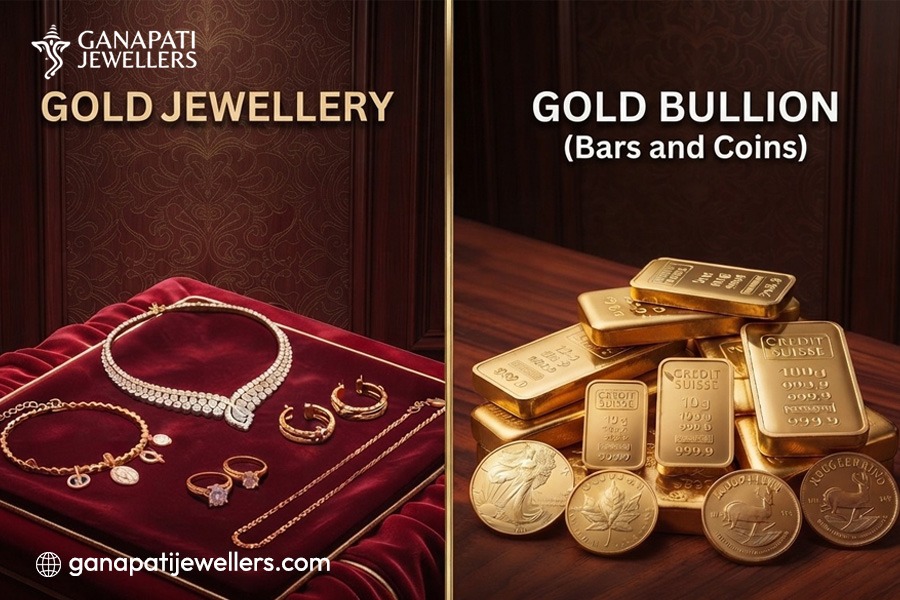
Gold Jewellery
Jewellery is gold made into ornaments such as necklaces, bangles, rings and earrings. It is usually 22K (about 91.6% pure) so that it is strong enough for daily use. Its price includes the gold, the making charge, possible wastage, any stones and tax.
Gold Bullion
Bullion means gold in simple, investment form. In Nepal this usually means gold bars and coins, often 24K (about 99.9% pure) and often called chhapawal. Its price is close to the gold rate, with a small premium for minting, packaging and dealer margin.
The key difference: with jewellery you pay for gold and craftsmanship. With bullion you pay mainly for gold.
2. Why the Gold Price in Nepal Matters for Both
Gold in Nepal is mostly imported, so the local rate follows the international gold price, the US dollar to rupee exchange rate, import duties and local demand. The daily rate is announced by the Federation of Nepal Gold and Silver Dealers’ Association (FENEGOSIDA), and jewellers use it as their base.
Whether you buy a necklace or a coin, a rise in the gold rate lifts the value of both. What changes is how much of your money is actually turned into gold, and how much you can get back when you sell.
To learn how the rate becomes a final bill, read our guide on How the Cost of Gold in Nepal Is Calculated and How to Read a Gold Price Quote.
3. Buying Gold Jewellery: Pros and Cons
Pros of Buying Jewellery
- You can wear and enjoy it. Jewellery gives daily pleasure and pride, which a gold bar in a locker cannot.
- It carries cultural and emotional value. Weddings, festivals and family traditions in Nepal often call for ornaments.
- It can be a store of value. The gold in the ornament still follows the market price.
- It is easy to gift and pass on. Jewellery is often handed down through generations.
- Wide choice of design. You can choose traditional or modern pieces, or have something made to order.
- Useful in an emergency. Jewellery can be sold or pledged for a loan when cash is needed.
Cons of Buying Jewellery
- Making charges add cost. You pay extra for design and labour, and this amount is usually not returned in full when you sell.
- Wastage may be charged. Some shops add a deduction for gold lost during crafting.
- Lower resale value. When you sell or exchange, the shop often deducts for making charges, wastage and the wear on the piece.
- Purity is lower than bullion. 22K jewellery contains less pure gold per gram than 24K bars.
- Stones complicate the price. Diamonds and coloured stones are priced separately, and resale value for stones can be much lower than their buying price.
- Risk of loss or theft. Wearing or keeping jewellery at home needs care.
- Wear and damage. Daily use can bend, scratch or break pieces over time.
4. Investing in Gold Bullion: Pros and Cons
Pros of Investing in Bullion
- Lower extra cost. There is usually no design charge, only a small premium over the gold rate.
- Higher purity. 24K bars and coins give you more actual gold for your money.
- Better resale value. Because there is little craftsmanship cost, you usually get back a larger share of what you paid.
- Simple to value. Price is easy to check against the daily rate, so there are fewer hidden items.
- Easy to store and divide. Coins and small bars come in different weights, so you can buy a little at a time.
- A hedge in uncertain times. Many people hold gold to protect savings when prices rise or markets feel unstable.
Cons of Investing in Bullion
- No income. Gold pays no interest or dividend. Your gain comes only if the price rises.
- Price can fall. Gold prices go up and down. Short-term losses are possible, and there is no guarantee of profit.
- Storage and safety needs. You must keep it somewhere safe, such as a bank locker, which may have a yearly fee.
- No daily use. It does not serve as jewellery for weddings or festivals.
- Selling needs proof. Original bills, hallmark and packaging help prove purity and get a fair price.
- Fewer options than some countries. Gold funds and similar paper products may be limited or unavailable locally, so check what is currently offered by licensed institutions.
5. Side-by-Side Comparison
| Feature | Gold Jewellery | Gold Bullion (Bars and Coins) |
| Main purpose | Wear, gift, tradition, with some saving value | Saving and investment |
| Typical purity | Mostly 22K | Mostly 24K |
| Extra costs | Making charge, wastage, stones, tax | Small premium over the gold rate |
| Resale value | Usually lower because of deductions | Usually closer to the market rate |
| Emotional and cultural value | Very high | Low |
| Ease of valuation | Harder, many price parts | Easier, close to the daily rate |
| Storage need | Moderate, daily care | Needs safe storage such as a locker |
| Flexibility in size | Fixed by design | Available in small and large weights |
| Best for | Weddings, festivals, personal use | Long-term savings and wealth protection |
6. A Simple Example: Where Your Money Goes
This example uses illustrative numbers only. It is not today’s rate, and shop charges vary. Suppose you have NPR 400,000 to spend, and the 24K rate is NPR 200,000 per tola.
| Item | Jewellery (22K) | Bullion (24K) |
| Money spent | NPR 400,000 | NPR 400,000 |
| Portion paid as making charge and tax (example: about 8%) | About NPR 32,000 | Small premium, for example 1% to 2%: about NPR 4,000 to 8,000 |
| Money that actually buys gold | About NPR 368,000 | About NPR 392,000 to 396,000 |
| Purity of gold you get | 22K | 24K |
In this example, more of your money turns into pure gold when you buy bullion. Jewellery gives you the beauty and use, but part of the price pays for craftsmanship that you may not recover when you sell.
Note: Making charges and premiums vary by shop, design and weight. Always ask for the exact figures.
7. Which Option Is Right for You?
There is no single correct answer. It depends on your goal.
Choose Jewellery If
- You need ornaments for a wedding or festival.
- You value wearing and passing on family pieces.
- You accept that part of the price is for design and is not meant as a pure investment.
Choose Bullion If
- Your main goal is saving or protecting your money over the long term.
- You want to pay as little extra as possible above the gold rate.
- You are comfortable storing gold safely.
Consider a Mix of Both
Many families do both. They buy a few meaningful ornaments for use and add coins or small bars over time as savings. This way, you enjoy gold today and also build a more efficient reserve for tomorrow.
A Gentle Reminder About Investing
Gold can be one part of a balanced plan, but it should not be your only savings. Prices can rise and fall. Think about your timeline, your emergency fund and your other needs before you decide how much to put into gold. If you are unsure, speak with a qualified financial advisor.
8. Safety and Buying Tips
- Buy from trusted, registered sellers. Check their reputation and ask for a proper bill.
- Check purity and hallmark. Ask for the purity certificate, especially for bars and coins.
- Compare prices. Ask at least two or three shops about the making charge or premium.
- Ask about buy-back terms before you buy. Find out what will be deducted if you sell or exchange later.
- Keep original bills and packaging. For bullion, keep the sealed pack and certificate safe.
- Plan your storage. Use a bank locker or another secure method rather than keeping valuable gold loosely at home.
- Check the rate and the unit. Confirm the date, time, and whether the price is per tola or per 10 grams.
- Be aware of rules. Import, tax and travel rules for gold can change, so confirm with official sources.
- Buy in steps. Spreading purchases over time can reduce the stress of trying to guess the perfect moment.
9. Frequently Asked Questions
Is gold jewellery a good investment in Nepal?
It can hold value because it contains real gold, but making charges, wastage and resale deductions reduce what you get back. It is better seen as a mix of enjoyment and saving than as a pure investment.
Is bullion better than jewellery for saving?
For pure saving, bullion is usually more efficient because you pay less above the gold rate and get higher purity. Jewellery suits those who want to wear and enjoy their gold.
Do I lose money when I buy jewellery?
Not necessarily, but part of what you pay is for craftsmanship. When you sell, that part is often not returned, so gold prices need to rise enough to cover the gap.
Where can I buy gold coins and bars in Nepal?
Most people buy from registered jewellers and authorised dealers. Always check purity, the bill and the buy-back policy, and confirm which institutions currently offer bullion.
How should I store gold safely?
A bank locker is a common choice. Keep your bills and certificates in a separate safe place, and consider insurance options if available.
Does gold always go up in price?
No. Gold can rise for years and also fall for periods. It is not a guaranteed profit, so invest only what you can keep for the long term.
Which is better for a wedding: jewellery or bullion?
Jewellery is usually the natural choice for wedding use and gifting. Some families also add coins as a savings gift. Decide based on what the occasion needs.
What is the best time to buy gold?
No one can predict the price with certainty. Many buyers spread purchases over time, which can help avoid buying everything at a single high price.
Conclusion
Jewellery and bullion are two paths to owning gold in Nepal. Jewellery brings beauty, tradition and daily joy, but costs more per gram of gold and usually returns less on resale. Bullion is simple, pure and cost-efficient for saving, but needs safe storage and offers no everyday use.
The best choice is the one that matches your goal. If you want to wear it, choose jewellery. If you want to save, lean toward bullion. If you want both, combine them wisely. Whatever you choose, check the daily rate, the purity, the unit and the itemised bill before you pay.
Disclaimer: This article is for general information only and is not financial, investment or legal advice. Gold prices change daily, and rules, taxes and duties can change. Please confirm current rates and regulations with official sources or a licensed professional before buying or selling gold.


